Michael Megaly, MD, MS, FACC, FSCAI
Interventional Cardiologist
Complex Coronary and CTO PCI & Limb Salvage Specialist | Oklahoma City


Limb Salvage & Amputation Prevention With Complex PAD Interventions
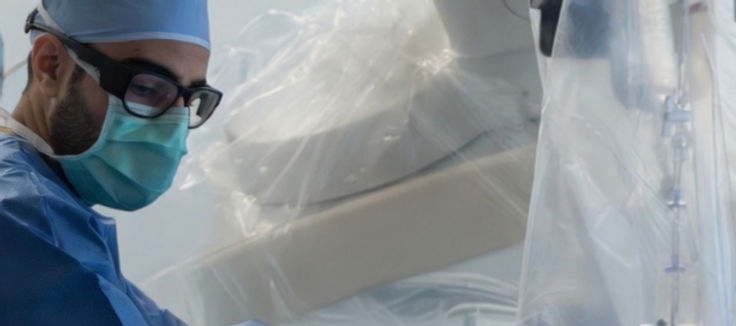
What is Chronic-Limb Threatening Ischemia (CLTI)? And How Does Limb Salvage Work?
Limb salvage refers to the use of advanced endovascular procedures to restore blood flow to a threatened limb and prevent amputation in patients with severe peripheral artery disease.
The condition driving most limb salvage interventions is chronic limb-threatening ischemia (CLTI), the most advanced and dangerous stage of peripheral artery disease. CLTI develops when arterial blockages reduce blood flow to the foot and lower leg to the point that tissue survival is at risk. Patients present with rest pain that worsens at night, non-healing ulcers or wounds that fail to respond to wound care, or gangrene.
What makes CLTI anatomically distinct from routine peripheral artery disease is where the blockages are. In CLTI, the disease typically involves the tibial and peroneal arteries. These are the small vessels below the knee that supply blood directly to the foot. It also often involves the small vessels in the foot (below-ankle vessels). These arteries are often completely occluded, heavily calcified, and diseased across long segments, requiring expertise in treating such complex peripheral arterial disease.
Limb salvage procedures reopen those blocked arteries through a small puncture in the skin, without open surgery or general anesthesia, restoring the circulation the body needs to heal itself. The goal is not only to preserve the limb anatomically but to maintain a leg that functions, one that can bear weight, support walking, and allow independent living.

Why Patients Are Told Amputation Is the Only Option
When the arteries below the knee and below the ankle are completely blocked or heavily calcified, standard endovascular techniques fail. Conventional balloons cannot cross the occlusion. Without restored blood flow, wounds cannot heal, infection spreads, and amputation becomes the default recommendation.
This recommendation is often made in good faith, but not always by a specialist with the training and tools required to treat the most complex tibial and pedal anatomy. What frequently goes unanswered is whether a physician using advanced crossing techniques, plaque-modification tools, and alternative access strategies could open those vessels that conventional methods have already failed to open.
A second opinion from a limb salvage specialist changes outcomes for a meaningful number of patients who were told nothing more could be done.
Limb Salvage Treatment: What the Procedure Involves
Limb salvage procedures are performed through a small puncture in the skin, no open surgery, no large incisions, no general anesthesia in most cases.
Using live X-ray guidance, specialized wires and catheters are used to navigate to the blocked arteries in the leg and foot and restore blood flow.
For the most complex cases (the ones that have already been declined at other centers) the approach goes significantly further than standard angioplasty:
-Advanced CTO crossing techniques: the same wire escalation and retrograde strategies used in complex coronary interventions are applied to completely blocked tibial and pedal arteries, crossing occlusions that standard wires cannot.
-Retrograde pedal access: when the blockage cannot be crossed from above, the artery is accessed directly through the foot and crossed from below.
-Plaque modification: heavily calcified vessels that resist balloon expansion are treated with atherectomy or intravascular lithotripsy to prepare the artery before dilation.
-Drug-coated balloons: deliver medication directly to the vessel wall to reduce the chance of the artery re-narrowing after the procedure.
-Angiosome-targeted revascularization: blood flow is directed specifically to the arterial territory supplying the wound, not just the nearest accessible vessel, to give the wound the best environment to heal.
Most patients go home the same day or the following morning.

What Happens If Limb Salvage Is Successful?
Restoring blood flow to the foot changes a lot. Wounds that have been stalled for months, unresponsive to antibiotics, wound care, and dressings, begin to close once the underlying problem of inadequate perfusion is corrected. Rest pain resolves. The risk of life-threatening infection drops.
Beyond the leg itself, the stakes are higher than most patients realize. Major lower extremity amputation carries a dramatically increased risk of cardiovascular death in the following two years and a significant loss of functional independence.
Observational data show that patients who achieve successful revascularization have better functional outcomes than those who proceed to major amputation, though outcomes depend on individual anatomy, wound status, and comorbidities.
Limb salvage is not just about keeping a leg. It is about keeping your life on your terms.
Frequently Asked Questions About Limb Salvage and Amputation Prevention
When to Seek a Second Opinion for Amputation Prevention?
Patients who:
-
Were recommended below-knee or above-knee amputation due to blockages in their leg arteries.
-
Were told that the blockages in the leg cannot be treated.
-
Have non-healing wounds and gangrene in the foot
-
Need to understand all available options, including open surgery alternatives, before making a decision.
Can amputation really be prevented if I've already been told nothing can be done?
In many cases, yes. Patients who have been declined treatment at one center can sometimes be treated by specialists using advanced techniques. A second opinion may identify treatment options for patients who were told none exist.
How quickly do I need to act?
CLTI with active tissue loss is a time-sensitive condition. The longer blood flow remains inadequate, the greater the tissue damage and the smaller the window for successful revascularization.
If amputation is being actively planned or tissue loss is progressing, seek evaluation as soon as possible.
What does recovery look like?
Most limb salvage procedures are performed under conscious sedation with local anesthesia. The majority of patients are discharged the same day or the following morning. Walking is encouraged early. Wound healing following successful revascularization typically progresses over weeks to months as restored circulation supports tissue repair.
Who performs endovascular limb salvage in Oklahoma City?
Dr. Michael Megaly performs complex peripheral artery interventions and endovascular limb salvage at Integris Health Heart Hospital in Oklahoma City, including below-the-knee and foot artery procedures for chronic limb-threatening ischemia. He has published research on critical limb ischemia outcomes and described a novel technique for complex iliac artery occlusion in JACC: Cardiovascular Interventions.
Limb Salvage at a Glance
Chronic limb-threatening ischemia (CLTI) is the most severe stage of peripheral artery disease, marked by pain at rest, non-healing foot or leg wounds, or gangrene. Without restoring blood flow, CLTI carries a high risk of major amputation. Endovascular limb salvage reopens blocked arteries in the thigh, below the knee, and in the foot using balloons, stents, and atherectomy through a small puncture.
Current guidelines recommend that patients with CLTI be evaluated for revascularization to minimize tissue loss. Wound healing after the procedure typically requires ongoing coordination with wound care and podiatry. Most procedures involve a same-day or overnight stay.
Medically reviewed by Michael Megaly, MD, MS, FACC, FSCAI; Interventional Cardiologist, Integris Health Heart Hospital, Oklahoma City.
Dr. Michael Megaly performs complex peripheral artery disease interventions and limb salvage procedures at Integris Health Heart Hospital in Oklahoma City, with a focus on infrapopliteal and below-ankle disease in patients referred after prior revascularization attempts were unsuccessful.