Michael Megaly, MD, MS, FACC, FSCAI
Interventional Cardiologist
Complex Coronary and CTO PCI & Limb Salvage Specialist | Oklahoma City


What is Coronary Chronic Total Occlusion? And How Is It Treated?

What Is a Coronary Chronic Total Occlusion?
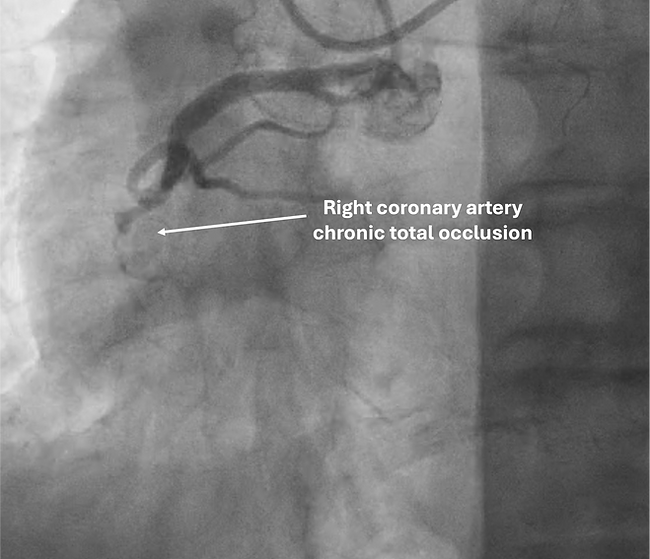
A chronic total occlusion, or CTO, is a complete blockage in one of the heart's arteries that has been present for at least three months, and often for years. It is typically discovered during a coronary angiogram (heart catheterization) performed to evaluate chest pain, shortness of breath, or other cardiac symptoms.
Why Are Many Patients Told There Are "No Options" for Treatment?
Because a CTO is completely blocked and often heavily calcified and structurally complex, it cannot be treated with a standard stenting approach. CTO intervention requires specialized training, dedicated equipment, and a high volume of procedural experience that goes beyond standard interventional cardiology practice.
As a result, many patients with a CTO are advised to continue medications, pursue open-heart bypass surgery, or simply live with their symptoms, even when those symptoms significantly limit their daily life.
A second opinion from a physician who specializes in CTO intervention can clarify whether a minimally invasive option exists for you.

What Is CTO Percutaneous Coronary Intervention (PCI)?
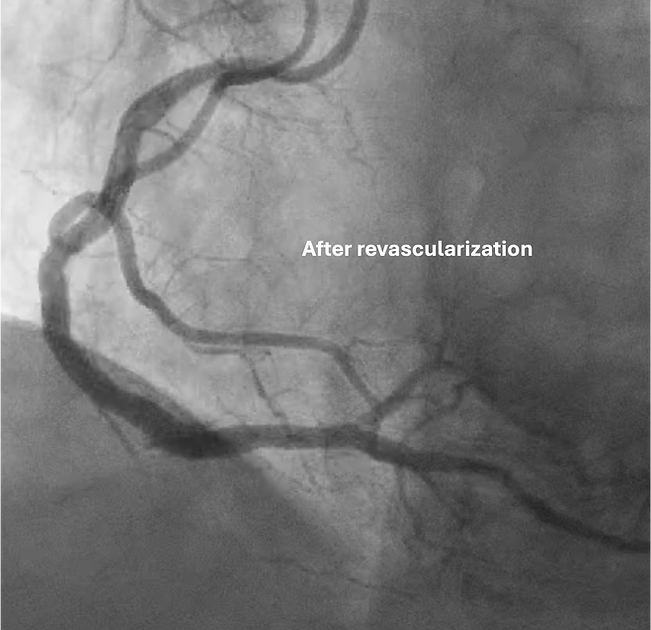
CTO PCI is a specialized, minimally invasive procedure that reopens a completely blocked coronary artery using advanced wires, microcatheters, and techniques not used in standard stent procedures. Operators can approach the blockage from the front (antegrade) and, when needed, from behind (retrograde) by navigating through small natural connecting vessels (collaterals), allowing the vessel to be crossed and opened in ways not possible with conventional techniques.
Because of this complexity, CTO PCI requires extensive dedicated training and high-volume experience to perform safely and effectively.
How CTO PCI Can Improve Daily Life.
High-quality clinical trials have shown that patients who undergo successful CTO PCI experience meaningful improvement in chest pain (angina) and quality of life compared with medications alone. The ORBITA-CTO trial demonstrated significant symptom reduction in patients with CTO-related angina following successful revascularization. The EUROCTO trial showed improvements in health-related quality of life and angina frequency at one year in patients treated with CTO PCI compared with optimal medical therapy.
Patients in these trials reported being able to walk farther, climb stairs more easily, and return to activities they had given up due to heart symptoms. Some were also able to reduce the number of antianginal medications needed for daily symptom control.
These benefits arise because restoring blood flow to chronically ischemic myocardium reduces the chronic demand-supply mismatch caused by complete occlusion. Individual outcomes depend on each patient's specific anatomy, clinical situation, and overall cardiac function.
Frequently Asked Questions
Who might benefit from an evaluation for CTO PCI?
Patients who:
-
Were told "nothing can be done" after a CTO was found on an angiogram
-
Were advised to consider open-heart bypass surgery for a single-vessel CTO
-
Have persistent chest pain or shortness of breath despite medications
-
Have reduced ability to perform daily activities due to cardiac symptoms
How is a CTO diagnosed?
CTOs are typically identified during a coronary angiogram performed for symptoms or as part of a broader cardiac evaluation.
Is CTO PCI risky?
CTO PCI carries a higher inherent risk than standard coronary stenting due to procedural complexity. Published data from large multicenter CTO registries demonstrate that complication rates at experienced, high-volume centers are comparable to those of other complex coronary interventions.
A thorough evaluation of your anatomy and overall health is required to determine whether the benefits outweigh the risks for your specific situation.
How long is the recovery after CTO PCI?
Most patients are discharged the same day or the following day and resume light activity quickly.
Who performs CTO PCI in Oklahoma City?
Dr. Michael Megaly performs chronic total occlusion PCI at Integris Health Heart Hospital in Oklahoma City. He completed a dedicated advanced fellowship in complex coronary and CTO intervention at Henry Ford Hospital in Detroit, has authored more than 200 peer-reviewed publications including studies on CTO outcomes and techniques, and serves as invited faculty at national and international CTO conferences, including CTO Plus and EuroCTO.
CTO PCI at a glance
A chronic total occlusion (CTO) is a coronary artery that has been completely blocked for three months or longer. CTOs are found in roughly 15–25% of patients with coronary artery disease who undergo angiography. CTO PCI reopens the blocked artery through a catheter, without open-heart surgery, using antegrade and retrograde techniques.
Contemporary multicenter registries report technical success in approximately 85–90% of cases at experienced centers. The primary goals are relief of angina and improved quality of life. Most patients go home the same day or the following day.
Medically reviewed by Michael Megaly, MD, MS, FACC, FSCAI; Interventional Cardiologist, Integris Health Heart Hospital, Oklahoma City.
Dr. Michael Megaly performs chronic total occlusion PCI at Integris Health Heart Hospital in Oklahoma City.
He completed a dedicated complex coronary and CTO fellowship at Henry Ford Hospital in Detroit, one of five programs of this type in the United States, and has authored or co-authored over 200 peer-reviewed publications, with research spanning CTO outcomes, retrograde crossing techniques, CTO PCI in cardiomyopathy, and the impact of successful revascularization on left ventricular function.
He has contributed chapters to the principal CTO textbooks, including the Manual of CTO PCI and Chronic Total Occlusions: A Guide to Recanalization, and has served as invited faculty at CTO Plus, EuroCTO, and CRT.